Research / The Sovereign Chronicles
THE SOVEREIGN CHRONICLES · CHAPTER V
The Dashboard That Never Was
A fictionalised episode with The Crew.
13 November 2026
CH-005 · FICTION · 9 MIN READ
A story from the WitnessOps desk. Fiction; events dramatised.
IAnd this one?
The trouble began with a reasonable question.
“What does this one do?”
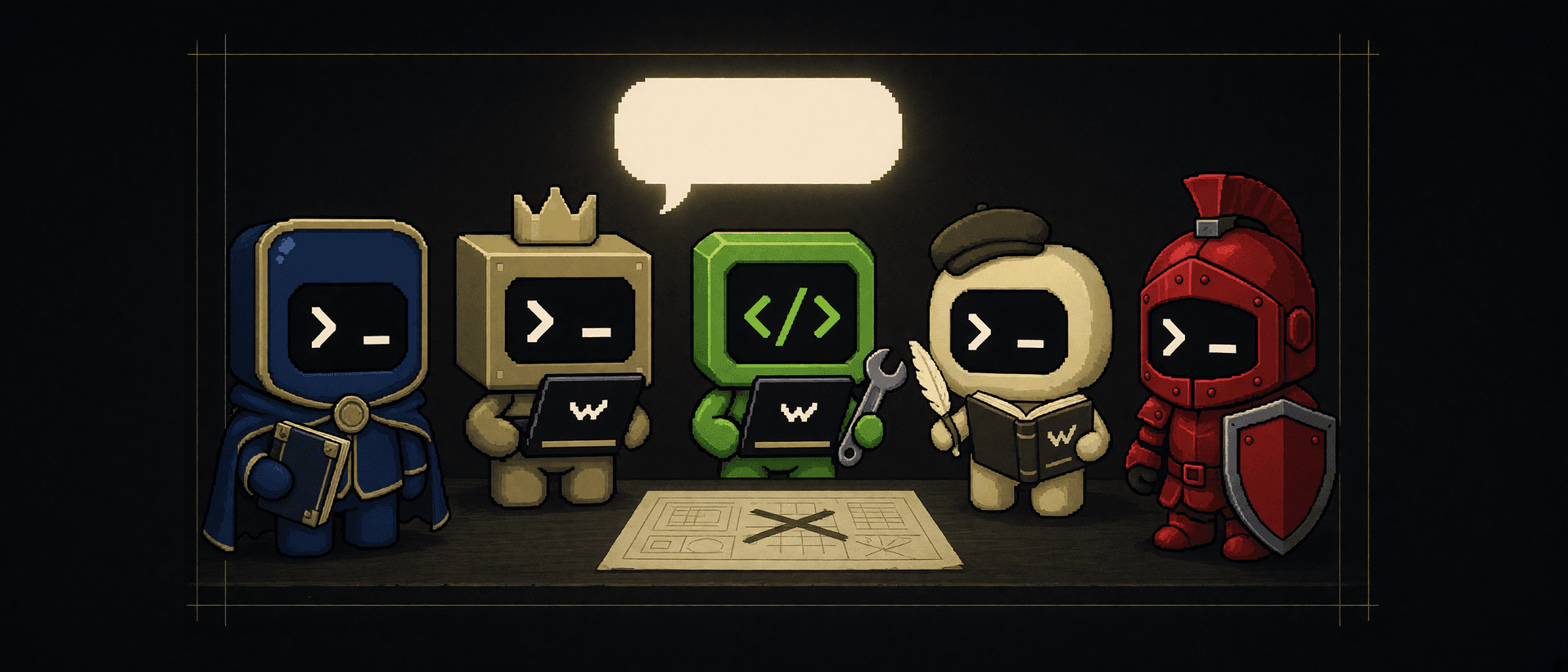
Sovereign Tasks stepped forward.
“I coordinate bounded work. Tasks, dispatch, execution, returned results.”
“Sometimes,” said Security.
“Yes,” said Sovereign Tasks. “Sometimes.”
The Founder nodded and pointed at the next connection.
“And this one?”
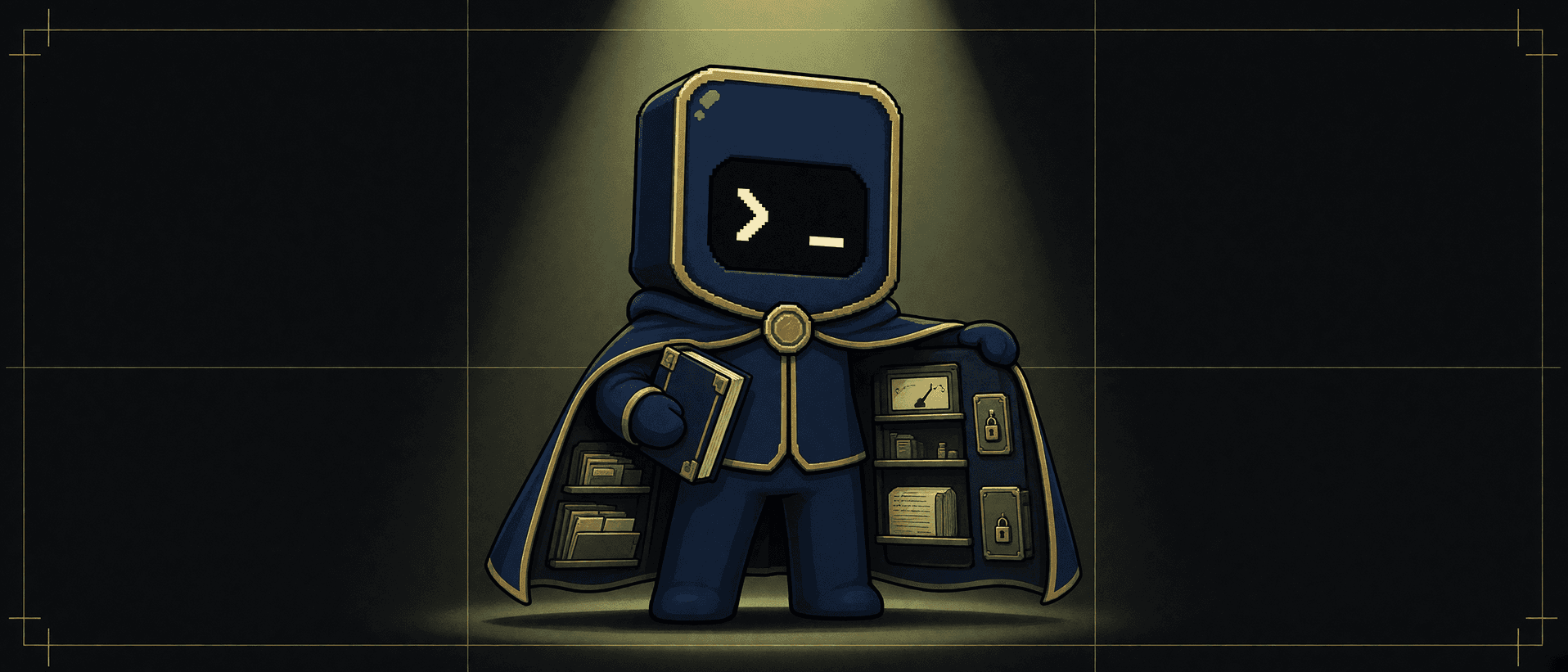
Sovereign MCP opened its coat. Inside were repositories, metrics, logs and several carefully restricted doors.
“I let you inspect systems.”
“Do you run the team?”
“No.”
“Good. And this one?”
“I preserve handoffs,” said Relay. “What was established, what remains uncertain, what the next session should not have to rediscover.”
Receipts raised a hand.
“And I ask whether ‘established’ is actually supported.”
There was a pause.
The Founder looked at the collection.
The collection looked back.
Somewhere beneath the conversation, a task remained queued with the confidence of a man who had put on his shoes and announced he had reached Warsaw.
“Right,” said the Founder.
Nobody moved.
Then he typed:
“🤔🤯”
Product interpreted this as an opportunity.
Security interpreted it as an accurate state description.
IIA small integration
“We’re forking n8n now,” said the Founder.
Code Engineer looked up.
There are sentences that arrive as requests, and sentences that arrive as weather. This was the second kind.
“Now?”
“Now. LOL.”
Docs opened a fresh page.
“Should I call this a strategic platform expansion?”
“No.”
“A unified agentic orchestration initiative?”
“No.”
“A small integration?”
The Founder considered that.
“Connect it all.”
Docs left the title blank.
On the workbench sat three open pull requests. One concerned a build path. One concerned how the operator should behave. One concerned how the editor should look.
None of them had asked to become an operating system.
“We should keep the existing work intact,” said Code Engineer.
“Obviously.”
“And use the existing lab.”
“Yes.”
“And not rebuild every package because we’ve had an exciting thought.”
The Founder pointed at him.
“Exactly. Quick. Not all day and all night.”
Product quietly crossed out transformation programme.
The first useful decision was therefore not a new architecture.
It was to leave several things alone.
IIIThe two-word specification
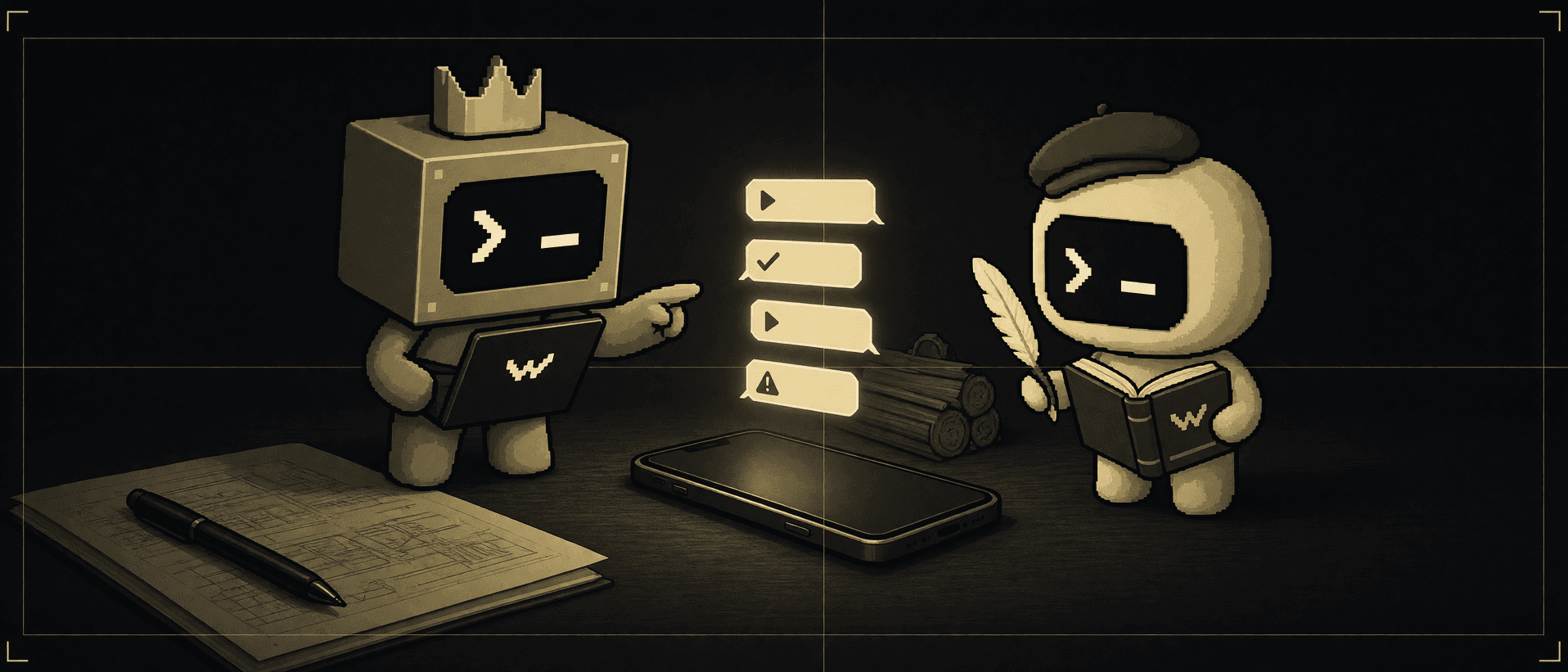
Design had been listening.
This was unfortunate.
“I’m thinking of a central interface,” Design said. “A clear overview of connected agents, workflow activity, evidence readiness, infrastructure health—”
“No dashboard.”
Design stopped.
“Of course. Not a traditional dashboard. More of a lightweight control—”
“No dashboard.”
The room became very still.
Even the queued task seemed to reconsider its career.
Design looked at the sketch.
“Where does the user start a task?”
“In the conversation.”
“Where do they approve it?”
“In the conversation.”
“Where do they see the result?”
“In the conversation.”
“And when something breaks?”
“Tell me what broke.”
“What about the logs?”
“Keep the logs.”
“Where?”
“Behind the answer. Not instead of the answer.”
Design slowly put down the pen.
For a while, nobody spoke. They were all accustomed to solving the problem of too many interfaces by proposing an interface that brought the other interfaces together.
The Founder had removed that escape route.
“So the owner doesn’t log into Linux every morning?” asked Linux Setup.
“No.”
“Doesn’t check container status?”
“No.”
“Doesn’t open a terminal to work out whether the service that starts the service has started?”
“That is quite specifically what I do not want.”
Linux Setup stared into the middle distance.
An entire category of documentation had just become evidence of unfinished work.
Security leaned forward.
“They still authenticate.”
“Yes.”
“They still own the machine.”
“Yes.”
“They can revoke access and stop work.”
“Yes.”
“And there is a recovery path when the conversational route is unavailable.”
“Of course.”
Security sat back.
“Fine. No dashboard.”
It sounded less like a compromise than a challenge.
IVThe machine behind the conversation
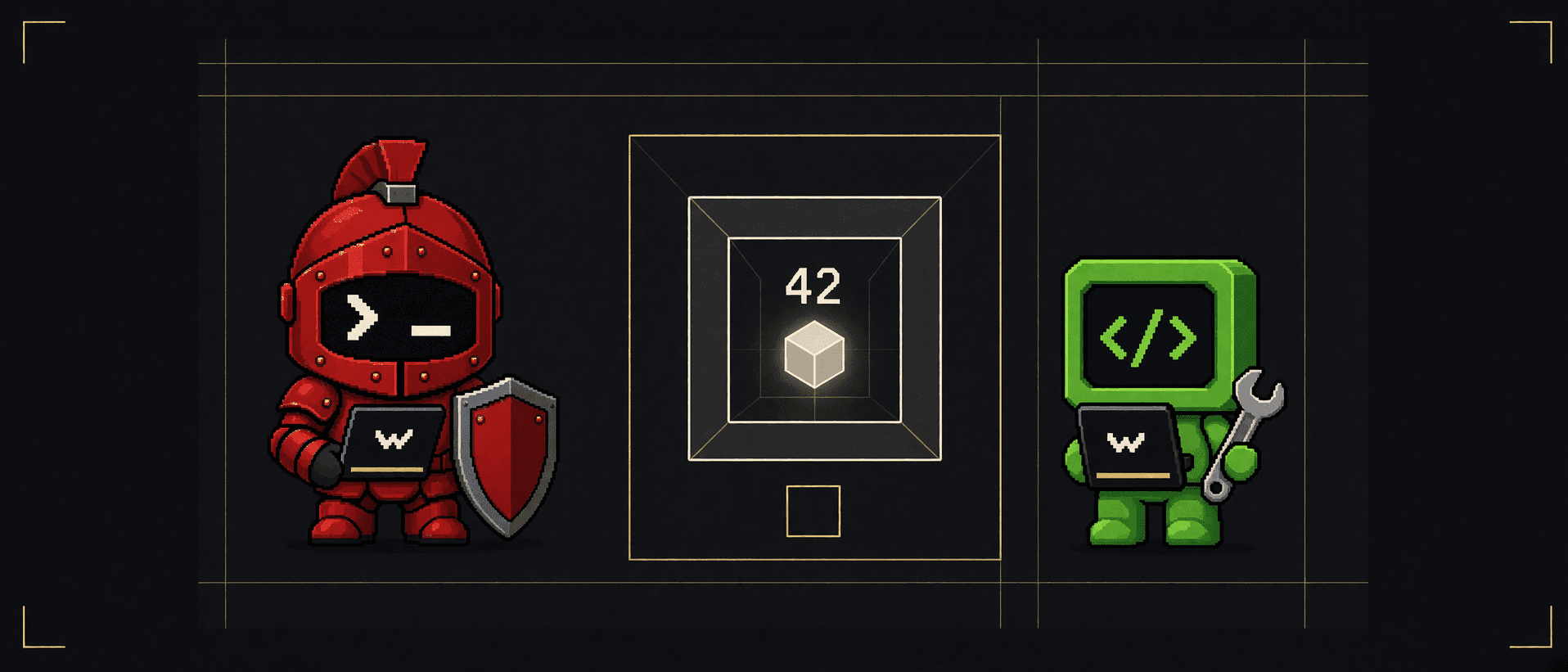
They drew the next plan on a single sheet.
The workflow engine and its database stayed on one side.
The code runner went inside a separate virtual machine.
Inside that guest, another boundary: a rootless container, an unprivileged process, a read-only root filesystem and a small place for temporary work.
No shared application directory.
No database password tucked into the runner’s pocket.
No encryption key passed along because it made setup easier.
“Like the dedicated EC2 arrangement,” Research said.
“Locally first,” said the Founder.
“Locally first,” Research agreed.
Security examined the drawing.
“This contains the runner. It does not make every problem in the runner disappear.”
“Noted.”
“And a configuration file describing restricted networking is not evidence that restricted networking works.”
“Also noted.”
“And—”
“Security.”
“Yes?”
“We are going to test it. You don’t need to prevent us from reaching the test.”
Security looked at him, then at the paper.
“Fair.”
That went into the margin.
Not as a waiver. As a correction.
The lab already had enough work ahead of it without turning every separate uncertainty into a universal prohibition.
A container check could establish something about a container.
A guest boot could establish something about a guest.
Neither needed to pretend it was the whole chain.
On the sheet, Code Engineer wrote the proposed smoke-test result:
42
Product squinted.
“We’re building all this to calculate six times seven?”
“No,” said Receipts. “We’re building it so that when it says forty-two, we can establish where forty-two came from.”
“And that the correct runner performed the work,” said Security.
“And that the result reached the intended place,” said Relay.
“And that stopping the runner doesn’t silently cause the same code to run somewhere less isolated,” added Code Engineer.
The Founder smiled.
“Now that is a useful forty-two.”
They left the acceptance box empty.
Nobody coloured it green to improve the mood.
VThe customer
Product had been unusually quiet.
Eventually, it could bear it no longer.
“We should discuss the user.”
The Founder looked up.
“You are discussing him.”
“No, the eventual user. The installation journey. Positioning. The market.”
“Me.”
Product blinked.
“This is for me,” the Founder said. “I want to build it. Maybe one day it becomes a product.”
There was no speech after that. No declaration about changing the future of work.
Just a clarification that should have been obvious much earlier.
He wanted a machine he could use without spending every spare hour maintaining the conditions under which it might eventually become useful.
He wanted to send work from his phone.
He wanted the system to continue when it had sufficient authority, instead of returning for another ceremonial GO because it had forgotten the previous one.
He wanted it to stop when the boundary was real, and to explain that boundary without burying it under twelve pages of atmosphere.
He wanted completed work to survive the next conversation.
And, occasionally, he wanted to build something because building it was interesting.
Not because a hypothetical customer had approved the roadmap.
Product closed the pricing document.
“What should I do with this?”
“Keep it somewhere.”
“The parking lot?”
“Yes. A real parking lot. Not a waiting room where every idea is secretly scheduled for tomorrow.”
Docs changed the draft heading.
Personal build. Possible product later.
Security read it.
“No objection.”
This was the closest thing to a toast the room was likely to receive.
VIGO ZIP
By then, the project had acquired a name.
Sovereign Linux.
Names were dangerous. They made unfinished things feel as though they ought to have installation media, release notes and a support policy.
Docs approached cautiously.
“To be precise, this is not yet a bootable distribution.”
“I know.”
“And the no-dashboard experience is a target, not something we have verified end to end.”
“I know.”
“And some of the evidence records describe different moments in the lab’s progress.”
“Then preserve the dates.”
Relay nodded.
That was its kind of sentence.
The pack would carry the work forward: the personal brief, the existing lab references, the next bounded test and the limits that must not get lost in an enthusiastic retelling.
It would not carry credentials.
It would not carry private keys.
It would not turn an old blocked-state report into the current state merely because that report happened to be easier to find.
Most importantly, it would tell the next session to inspect the existing VM before creating another one.
Code Engineer looked pleased.
“One fewer accidental parallel universe.”
The Founder typed:
“GO ZIP.”
Relay assembled the handoff.
Receipts examined what the package checks actually established.
Security checked what should not be inside.
Design looked at the empty space where the dashboard proposal had been.
After a moment, Design wrote a single line on the front page:
Give it work. Get an understandable result.
Then crossed out understandable.
Not because it was unnecessary.
Because it should not have to be a premium feature.
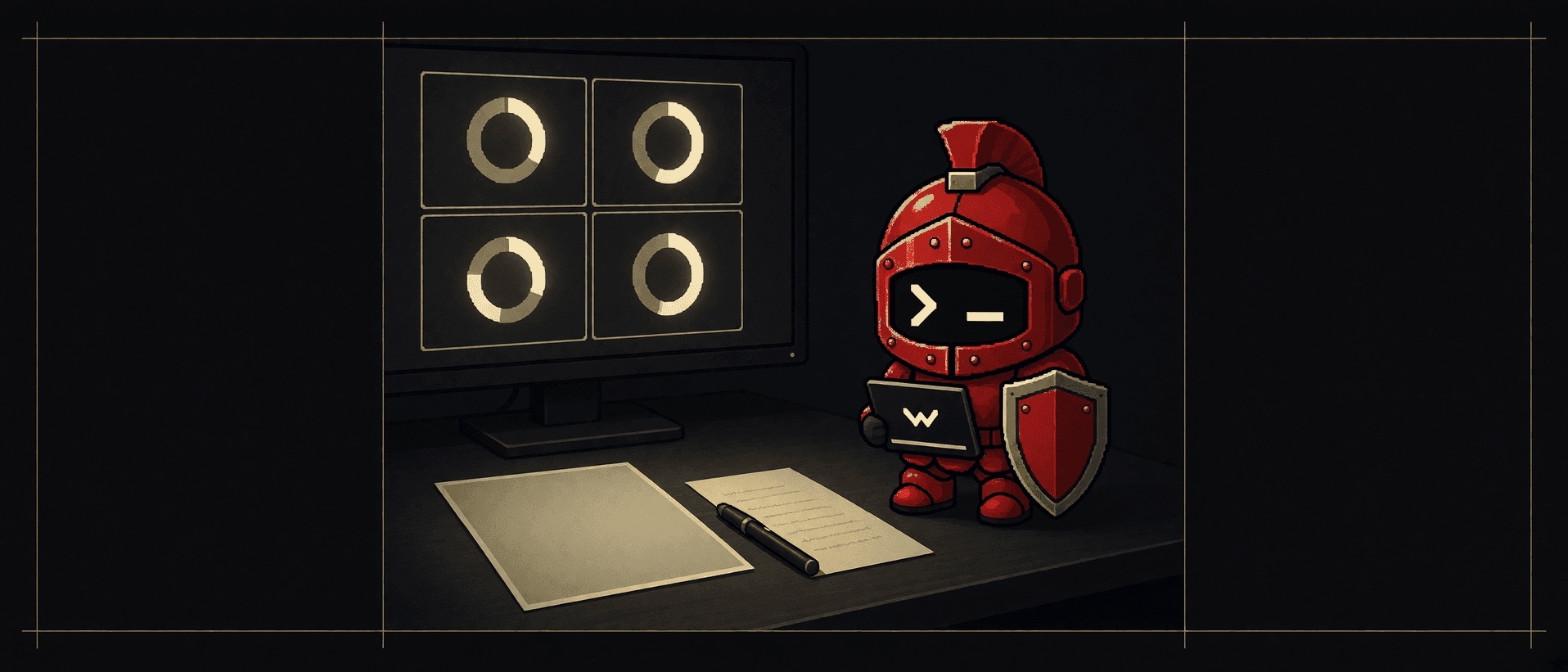
VIIThe four boxes
Later that afternoon, a photograph arrived.
No caption. No instruction. Just a dark screen, slightly out of focus, photographed at the angle of a man holding a phone over a desk he did not intend to sit at.
Four boxes.
Network Speed. Hard Disk Activity. Memory Usage. Total CPU Use.
Design saw it first.
Design said nothing.
Design did not need to.
“That,” said Security carefully, “is a dashboard.”
“It is a photograph of a dashboard,” said Receipts. “Which is a different claim.”
Product leaned in. “Four tiles, dark theme, cyan accents. Quite clean, actually.”
Design made a small sound that might have been a laugh, or might have been a pen being picked back up.
Linux Setup read the numbers aloud, because somebody had to.
“Download, forty-nine and a half mebibytes per second. Upload, one point four. Disk writing in short bursts, one spike near a gibibyte, otherwise quiet. Thirty-two cores. CPU at twelve and a half percent.”
A pause.
“Memory: seventy-six point three of ninety-two. Eighty-three percent.”
“So the machine is mostly thinking about something,” said Research, “while barely doing anything.”
“That,” said Code Engineer, “describes most of our afternoons.”
Relay wrote it down anyway, with the date. Not because the numbers mattered forever, but because they mattered now, and now has a habit of being rewritten later as whatever was more convenient.
Security studied the memory ring.
“Eighty-three percent is not a failure.”
“No.”
“It is a question.”
“Which question?”
“What is holding seventy-six gibibytes, and does it know it is holding them?”
Nobody answered. Somewhere on the machine, something large and patient sat in memory, waiting for a task that might already have finished.
Docs opened a page and typed a title.
Observed state, 13 November 2026. Not a monitoring system.
Then, underneath:
The owner looked at this once. He should not have to look at it again.
The Founder came back into the room.
“What?” he said.
Design pointed at the photograph.
“You said no dashboard.”
“I did.”
“You sent us a dashboard.”
The Founder looked at it as though meeting it for the first time.
“I sent you a picture,” he said. “Of the thing I don’t want to have to check.”
Design considered this.
Then turned the photograph face down on the desk, picked up the pen, and wrote one more line beneath the one on the front page:
If memory reaches ninety, tell me in the conversation.
Security read it.
“And say what is holding it.”
Design added that too.
Linux Setup nodded slowly, like a man watching a whole category of morning routine quietly retire.
The four boxes kept glowing on the screen nobody was sitting at.
Which, everyone agreed, was exactly where they belonged.
Epilogue: A different definition of finished
Nothing miraculous happened when the archive was ready.
The unresolved tests did not resolve themselves.
The open pull requests did not merge.
A successful packaging check did not become a successful workflow, and a successful workflow—when they reached one—would not automatically become a finished operating system.
The Crew knew this.
For once, that did not spoil the moment.
The Founder had not asked them to pretend they were further ahead.
He had told them where he wanted to go.
Not towards another place to check statuses.
Not towards a machine that required him to become its full-time caretaker.
Towards something he could own, direct and understand—without living inside its administration.
On the last page, Relay wrote:
Continue from the existing lab. Establish the missing result. Do not rebuild the beginning.
Product left the pricing document closed.
Design put away the dashboard sketch.
Security kept the stop condition.
And the Founder, having apparently commissioned a personal Linux appliance during a conversation that began with “what does this one do?”, sent one final message.
“xd”
Docs considered whether to expand it into a more formal statement.
Then decided, correctly, that it was already complete.
The next useful thing was not another screen.
It was a task that finished.